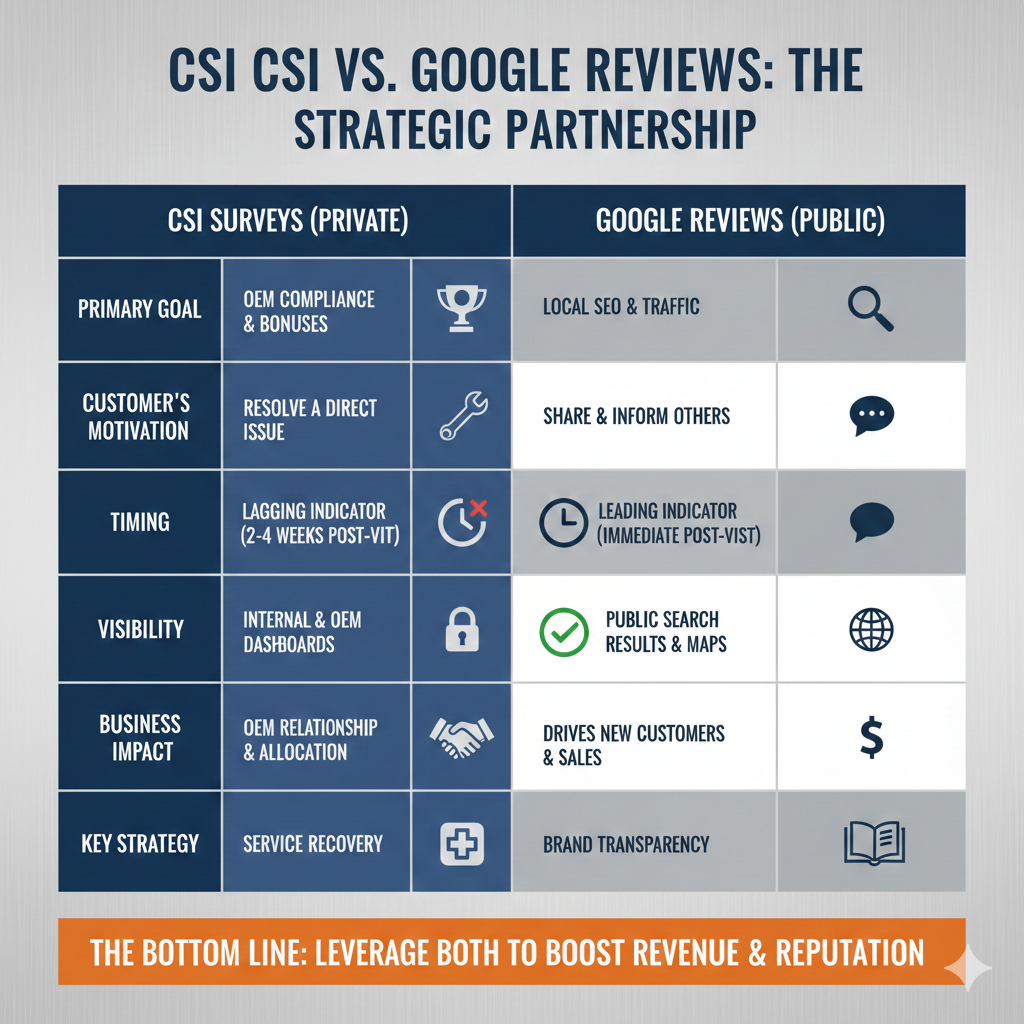
In the dealership world, there is a persistent fear that keeps GMs up at night: Survey Fatigue. The logic seems sound on the surface: “If I ask a customer for a Google Review today, they’ll be too annoyed to fill out the manufacturer’s CSI survey next week.”
As a result, many stores suppress their Google solicitation to “protect” their CSI. But here is the hard truth: This isn’t just a misconception; it’s a missed revenue opportunity. Data from industry leaders and giants like Napleton Automotive Group proves that CSI and Google Reviews don’t cannibalize each other. When managed correctly, they act as a high-performance engine where one fuels the other.
1. The Interception Strategy: Using Google to “Clean” Your CSI
We often view CSI as a lagging indicator—a ghost of an experience that happened weeks ago. By the time the OEM survey hits the inbox, the damage is already done.
Top-performing groups use a “Journey Insights” strategy to map feedback to the specific stage of the customer visit. By soliciting feedback immediately through a platform like Reputation, you create a safety net:
- The Napleton Model: By implementing a “Closed-Loop” accountability system, Napleton achieved a 99% review response rate.
- The “Save”: This allowed them to resolve grievances before the OEM survey was ever sent. When the manufacturer asks the question, the customer’s most recent memory isn’t the initial friction—it’s the incredible service recovery they received.
2. The Volume Paradox: More is More
The fear that a Google request “uses up” a customer’s willingness to help is debunked by the numbers. Napleton Automotive Group generated 5,000+ new Google reviews in just 12 months across their network, raising their group-wide average to 4.7 stars.
Crucially, this surge in public volume didn’t damage their internal metrics. High-volume review cultures create “Brand Accountability.” When a customer sees a dealership actively listening and responding to 99% of reviews, they perceive the store as more trustworthy, making them more likely to engage in the official manufacturer survey.
3. The $900,000 Difference
If you are prioritizing CSI solely for the manufacturer’s kickback, you’re missing the bigger picture. According to industry data from Reputation, dealerships that bridge the gap between “Private Feedback” (CSI) and “Public Proof” (Google) see an average of $900,000 in incremental annual sales compared to those who don’t.
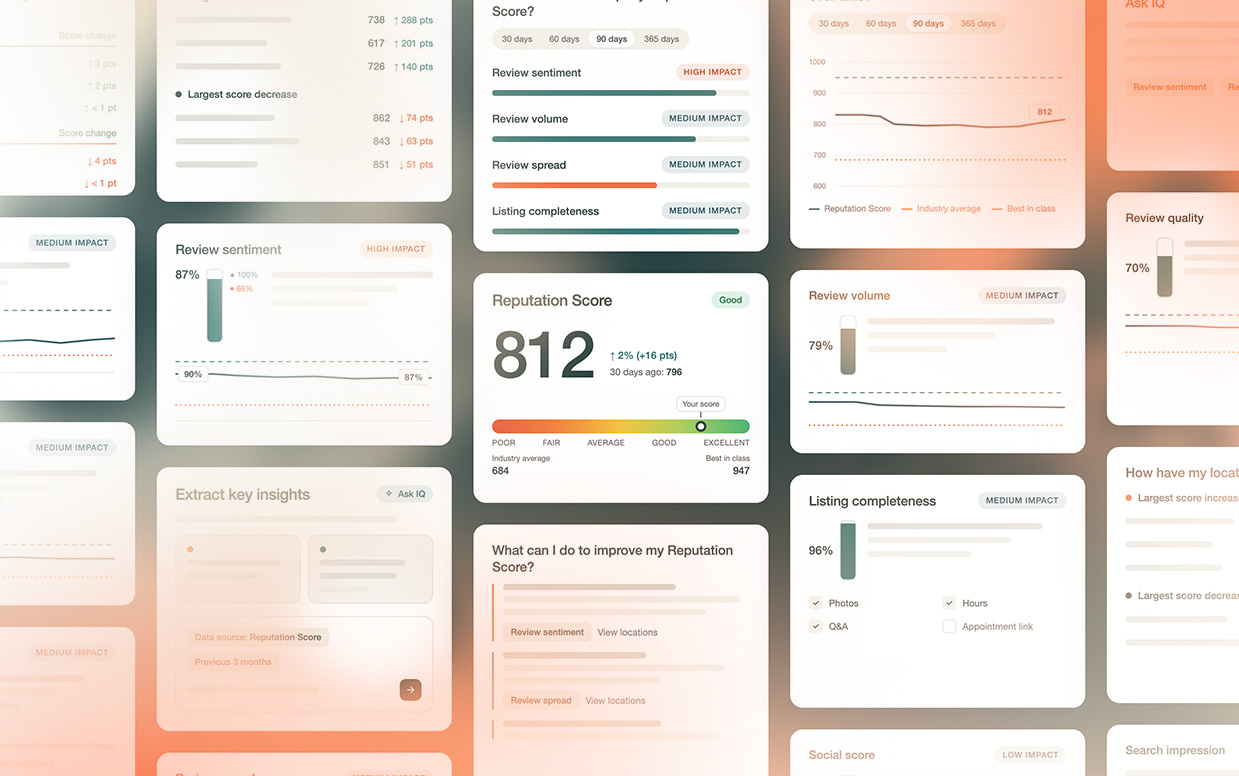
High-scoring dealerships (900+ Reputation Score) generate 7x more actions—calls, clicks, and direction requests—on their Google Business Profiles. This creates a virtuous cycle:
- Public Proof: High Google visibility drives more service appointments.
- Journey Mapping: Catching issues at the “Post-Visit” stage allows for immediate recovery.
- CSI Protection: Clean internal surveys secure manufacturer bonuses.
- Growth: Every 150-point increase in Reputation Score correlates to a 10% increase in sales.
The Verdict: Stop Choosing, Start Leveraging
You don’t have to choose between a 5-star Google rating and a top-tier CSI score. In fact, if you’re choosing one, you’re likely hurting both.
The most successful dealers today use Google Reviews to drive the “Clicks” and the Reputation Platform to drive the “Fix.” One gets them in the door; the other ensures they stay—and that the manufacturer stays happy.
Key Takeaways for Your Team:
- CSI is a Lagging Indicator: Use real-time Google solicitation to find and fix issues today.
- Response Matters: A 99% response rate (like Napleton’s) is the ultimate driver of customer loyalty.
Reputation = Revenue: Managing the “Public + Private” feedback loop is worth nearly $1M in annual incremental sales.